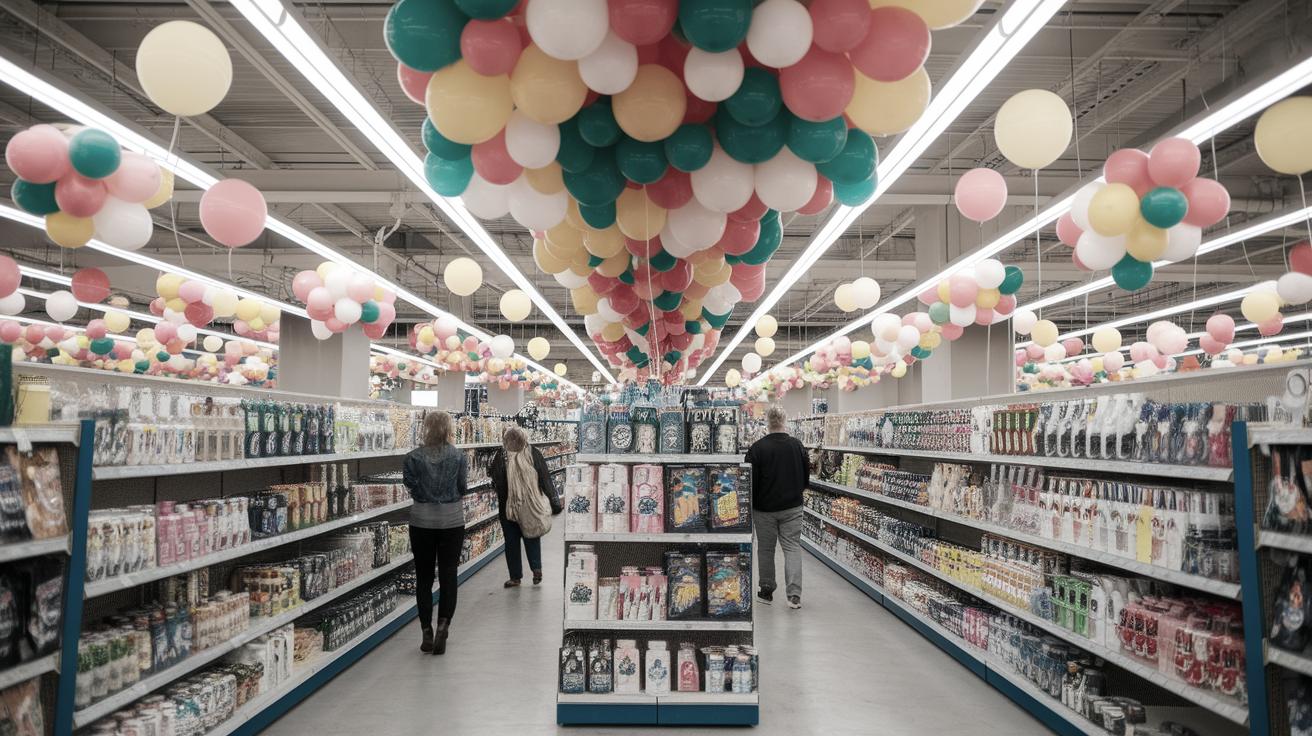
Why is Party City Closing?
Party City, a beloved retailer known for its vibrant party supplies and seasonal decorations, has announced the closure of several stores across the nation. As consumers shift their buying patterns and the retail landscape continues to evolve, questions arise about what is driving these closures and what might fill the void left behind. In this article, we explore the reasons behind these store closures, potential alternatives for party supplies, and examine a broader trend of retail changes expected in 2025. We also touch on current global news stories, offering a glimpse into the contextual backdrop against which these retail shifts are happening. Whether you’re a party planner seeking new supply sources or simply curious about retail trends, read on to discover more about these significant changes and what they could mean for the future of shopping.
Local Flyer
When news broke that Party City would be closing some of its locations, local communities reacted with a mix of nostalgia and concern. Party City stores have long been a staple for sourcing costumes, holiday decorations, and special event supplies. Many local flyers and community boards have started to feature farewell messages to stores that are closing, showcasing the tight-knit bond these retailers forged with their neighborhoods.
Amid these farewells, there is also a burgeoning conversation about the impact on local business landscapes. Flyers often point consumers toward smaller, independent stores that might offer personalized services and unique product offerings. Community centers are organizing support events, encouraging residents to explore local retail alternatives to fill the gap left by Party City’s departure.
Stores that could replace Party City
As Party City shutter its doors, customers are beginning to explore alternative retailers that could step in to fill the party supply gap. Some likely contenders include chain stores like Walmart and Target, known for their wide range of affordable party essentials. These superstores provide a one-stop-shop experience, tapping into their expansive inventory to meet various festive needs.
Aside from big-box retailers, independent specialty stores are gaining attention. These smaller shops often offer unique, artisanal products that Party City cannot provide. Online platforms such as Amazon and Etsy also remain popular, providing convenience and a global array of choices for party planners seeking alternatives.
Why is Party City closing?
The decision for Party City to close some of its stores is rooted in several economic and strategic factors. Primarily, the increasing shift towards online shopping has significantly impacted foot traffic in physical locations. With e-commerce giants like Amazon providing convenient home delivery of party supplies, traditional brick-and-mortar stores are struggling to compete.
Additionally, Party City’s financial performance has faced challenges from supply chain disruptions and rising operational costs. The COVID-19 pandemic exacerbated these issues, as social gatherings were heavily restricted, directly affecting sales of related products. In response, Party City is restructuring to focus on a more streamlined and economically sustainable business model, which unfortunately means closing under-performing stores.
What other retailers are closing stores in 2025?
Party City is not alone in facing difficult retail decisions; several other major retailers have announced planned closures in 2025. Department stores like Macy’s and Kohl’s are reevaluating their in-person shopping strategies, opting to reduce physical locations while shifting towards a stronger online presence.
Similarly, electronics retailers such as Best Buy have unveiled plans to downsize their store footprint. This trend reflects a broader industry pivot towards digital storefronts and direct-to-consumer business models, as shopping habits continue to favor the convenience of online purchases.
Trending
Current events are shaping consumer behavior in unpredictable ways. From international conflicts to economic policies, these factors contribute to the broader retail conversation. Here are some of the top trending news stories to consider.
Russia launches attack after rejecting ceasefire deal
In a significant geopolitical development, Russia has initiated military action after rejecting a proposed ceasefire deal. This escalation has heightened global tensions and is likely to impact international trade routes, possibly affecting global supply chains, including retail logistics.
Pope Leo XIV speaks to media
Pope Leo XIV recently addressed the media, focusing on themes of unity and peace. His message resonated worldwide, encouraging dialogue and reconciliation in tumultuous regions. The Pope’s influence often ripples into various societal facets, including consumer confidence and ethical purchasing trends.
Trump tariffs: US & China agree to 90 day pause
The ongoing trade negotiations between the US and China have taken a positive turn, with both nations agreeing to a 90-day pause on tariffs. This pause presents a window of opportunity for retailers to stabilize prices and reassess supply chain strategies that have been strained by past tariff impositions.
Trump confirms American hostage in Gaza to be released
President Trump’s confirmation of an American hostage’s impending release from Gaza has brought hopeful news amidst international unrest. Such developments can impact foreign relations policies, which in turn affect global market stability and consumer confidence worldwide.
Five arrested after over a ton of cocaine seized from boat off coast
An intense crackdown on illegal drug trafficking resulted in the seizure of over a ton of cocaine and the arrest of five individuals. These efforts by law enforcement agencies underscore the ongoing battle against organized crime, which often exerts indirect pressure on retail sectors, especially those related to security and logistics.
Next steps
| Section | Content Summary |
|---|---|
| Local Flyer | Community reactions and support for local stores as Party City closes locations. |
| Stores that could replace Party City | Exploration of alternatives, including both big-box and independent specialty stores. |
| Why is Party City closing? | Analysis of economic factors, online shopping trends, and the impact of the pandemic. |
| What other retailers are closing stores in 2025? | A look at other retailers planning store closures and shifts to digital platforms. |
| Trending | Current global events influencing consumer behavior and retail strategies. |