Maslow’s Hierarchy of Needs: Exploring Its Depth and Modern Relevance
Maslow’s Hierarchy of Needs is an influential psychological theory proposing that human motivations progress through a structured order of needs, from basic physical requirements to the pursuit of self-actualization. This blog post delves into the intricacies of Maslow’s original model as well as its expanded version, elucidating the components of deficiency and growth needs. We explore the theory’s applications in various sectors like workplace motivation, nursing, and education, while also critically evaluating its limitations and challenges. Through this comprehensive exploration, readers will gain insights into the enduring impact and evolving perspectives on human motivation, preparing them to apply these concepts to real-world contexts and emerging mental health paradigms.
What is Maslow’s Hierarchy of Needs?
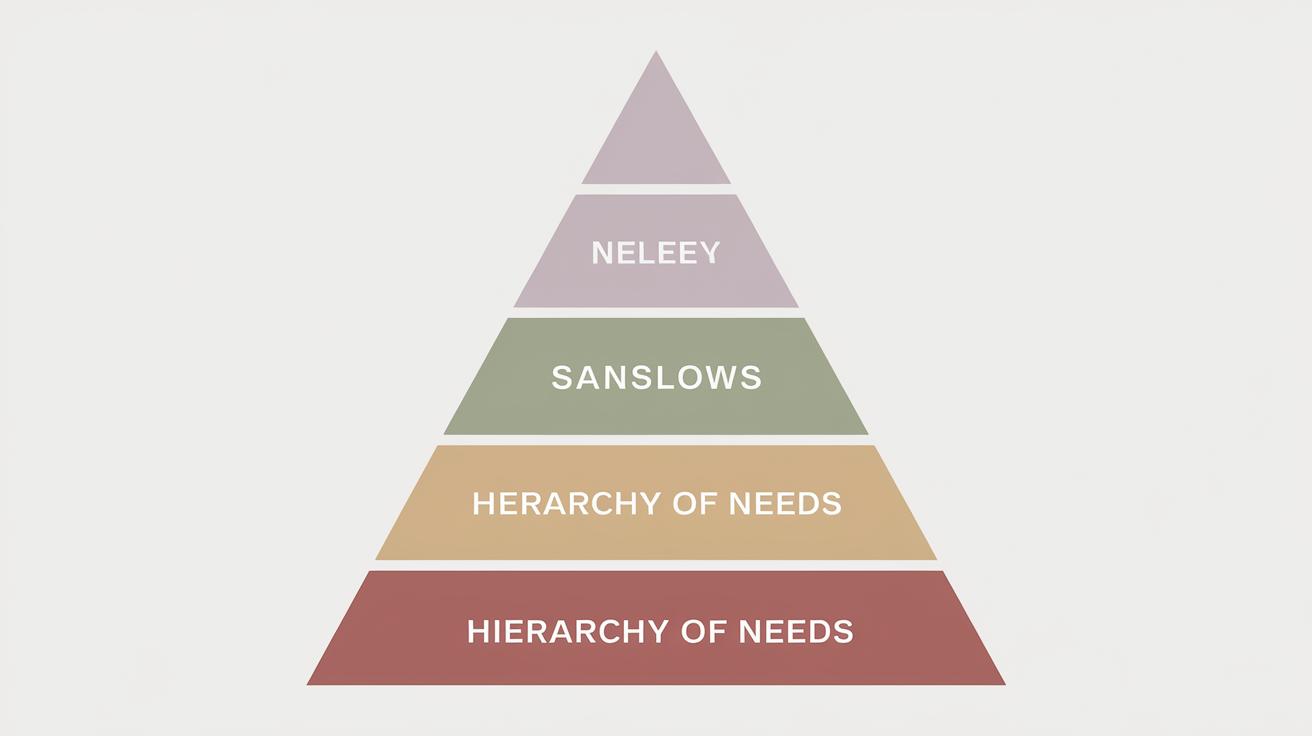
Abraham Maslow introduced the Hierarchy of Needs in his 1943 paper “A Theory of Human Motivation,” where he posited that humans have a series of needs arranged in a hierarchical order, with lower-level needs requiring fulfillment before higher-level needs can be addressed. Illustrated as a pyramid, the hierarchy is classified into five primary categories: physiological, safety, love/belonging, esteem, and self-actualization.
The theory suggests that basic needs, such as food and shelter, must be satisfied first, allowing individuals to subsequently address needs of a psychological nature, such as esteem and self-actualization. The structure of the hierarchy implies that as one ascends the levels, the focus shifts from survival-based motivations to more complex, growth-oriented aspirations. By understanding these needs, one can conceptualize how individuals prioritize different aspects of life.
Key Takeaways
Key takeaways from Maslow’s theory include its portrayal of motivation as a progressive journey, where fulfilling fundamental needs opens pathways to personal growth and self-discovery. It emphasizes the universality of needs but also acknowledges individual differences in how these needs manifest and are prioritized.
A significant element of Maslow’s framework is its differentiation between deficiency needs—those that arise due to deprivation—and growth needs, which emerge from a desire to grow and self-improve. These concepts provide insight into various human behaviors and motivations across different life stages and cultural contexts.
Deficiency needs
Deficiency needs, also known as “D-needs,” are positioned at the lower levels of Maslow’s pyramid. They include physiological needs, safety needs, social needs, and esteem needs. Physiological needs envelop the essentials for human survival, like food, water, and warmth.
Safety needs encompass emotional, financial, and physical security. Social needs relate to interpersonal relationships and belongingness, while esteem needs pertain to gaining recognition and providing self-respect. Addressing D-needs helps individuals avoid the negative effects of deprivation, creating a foundation of stability from which they can pursue personal ambitions and growth.
Growth needs
Growth needs, or “B-needs” (being needs), form the pinnacle of Maslow’s hierarchy. They primarily center on self-actualization, the pursuit of realizing one’s potential and aspirations. Unlike deficiency needs that can be fully satisfied, growth needs are more fluid and intrinsic, motivating individuals toward continuous self-improvement.
Growth needs encourage creativity, problem-solving, and the pursuit of meaning beyond basic survival, enabling individuals to attain personal fulfillment and achieve high levels of cognitive and aesthetic understanding. As these needs are largely introspective, they foster an ongoing journey of development and self-fulfillment.
The expanded hierarchy of needs
Over time, the hierarchy was expanded to include cognitive and aesthetic needs as intermediate stages, followed by self-transcendence, representing the pursuit of goals beyond personal gains, such as altruism and spirituality. These additions acknowledge that human motivation is more complex and interconnected.
This expanded model incorporates the complexities of modern life by addressing the spiritual and cognitive dimensions of human experiences. The layers complement each other, facilitating an understanding of motivation that seamlessly integrates personal, creative, and transcendent aspirations.
Self-Actualization Needs
Self-actualization represents the realization of individual potential and self-fulfillment. It is the ultimate stage in the hierarchy, where individuals focus on becoming the best version of themselves through creativity, problem-solving, and the pursuit of goals.
This stage embraces activities that foster peak experiences and self-expression, allowing individuals to thrive. Those who reach this level often exhibit profound authenticity, autonomy, and a commitment to ongoing personal development, influencing themselves and society positively.
Characteristics of Self-Actualized People
Self-actualized individuals typically exhibit traits such as autonomy, creativity, and deep relationships. They are comfortable with solitude, focus on reality rather than societal norms, and maintain a philosophical sense of humor. Their moral clarity often guides them to make decisions aligned with ethical principles.
Moreover, self-actualized individuals demonstrate a profound appreciation for life and the world around them, maintaining openness to experience. Their capacity for peak experiences provides deep emotional satisfaction and fulfillment, allowing them to frequently experience awe and wonder in ordinary life.
Applications & Examples
Maslow’s Hierarchy has significant practical applications across varied fields such as workplace organization, nursing, and education. By understanding individuals’ needs within these contexts, strategies can be devised to enhance motivation, satisfaction, and productivity.
For example, recognizing and addressing employees’ needs in a workplace can lead to higher job satisfaction and productivity. In education, understanding students’ motivations can inform teaching strategies, and in nursing, comprehending patients’ needs can improve care outcomes and patient satisfaction.
Workplace organizations and employee motivation
In organizational settings, the hierarchy can inform strategies to enhance employee motivation by addressing needs at various levels, from competitive salaries (physiological needs) to fostering a secure work environment (safety needs) and promoting teamwork (social needs).
Effective motivational strategies also support personal growth and development opportunities, aligning with esteem and self-actualization needs. By fulfilling these needs, organizations create an environment conducive to employee satisfaction, retention, and peak performance.
Nursing
In the healthcare sector, nurses can utilize Maslow’s hierarchy to prioritize patient care through a holistic approach, assessing patients’ needs beyond physiological requirements and addressing safety, social, and esteem needs.
For example, providing psychological support and fostering a sense of belonging can promote recovery and well-being. Understanding these dynamics allows healthcare professionals to tailor interventions that advance patient-centered care and improve overall health outcomes.
Education
In educational settings, applying Maslow’s hierarchy promotes an understanding of students’ varying motivations, leading to nurturing, adaptive teaching strategies. Academic environments that fulfill students’ basic, safety, and social needs encourage optimal learning and create supportive communities.
By addressing esteem and self-actualization needs, educators can facilitate opportunities for students to participate in decision-making, pursue passions, and cultivate intrinsic motivation, enhancing their learning journey and personal growth.
Critical Evaluation
1. Subjective Biographical Analysis
One criticism of Maslow’s theory is its basis in subjective biographical analysis of self-actualized individuals, potentially introducing bias. His selection of exemplary individuals may reflect subjective criteria rather than objective or universal attributes.
This approach limits the theory’s empirical support, as the qualities that define self-actualization and progression through the hierarchy may not be uniformly applicable across diverse populations and contexts.
2. Biased Sample and Limited Generalizability
Maslow’s samples skewed towards historically renowned figures, leading to concerns about the theory’s generalizability. The selected individuals, often Western and male, may not represent diverse cross-cultural backgrounds, questioning the universality of the hierarchy.
This bias necessitates caution when applying the theory globally, as cultural variations in values and motivations may yield different interpretations of needs and aspirations.
3. Difficulty in Empirical Testing
The abstract nature of defining and measuring self-actualization poses challenges in empirically testing Maslow’s theory. Concepts like self-actualization lack clear, operational definitions, complicating research attempts to validate the hierarchy.
The subjective assessment of individuals’ progression through the hierarchy further muddies empirical examination, as personal introspection may not accurately capture external observations of fulfillment.
4. Rigid Progression of Needs?
A critique of Maslow’s model is its rigid structure asserting that lower-level needs must be satisfied before addressing higher-level needs. This linear progression oversimplifies the complex, dynamic nature of human motivation.
Life circumstances often necessitate fulfillment of higher-level needs despite unmet basic needs, suggesting a more fluid interplay between different needs and motivations. This calls for a more nuanced understanding of human psychology.
5. Modern Pluralistic View of Motivation
Modern perspectives on motivation propose a more pluralistic view, considering motivations as a dynamic blend of needs, values, and desires that defy a strict hierarchy. Individuals may prioritize needs based on situational contexts rather than fixed stages.
This contemporary understanding aligns with human experiences marked by varying cultural, social, and personal influences, challenging the traditional hierarchical framework’s applicability across diverse settings.
6. Mental Health Contexts
Integrating Maslow’s hierarchy into mental health contexts reveals insights into clients’ motivations and unmet needs. However, the model lacks direct applicability to mental health challenges like anxiety or depression, which intersect with basic and higher-level needs alike.
Practitioners thus adopt a more comprehensive approach, considering both physiological symptoms and self-actualization goals to devise effective, holistic interventions that reflect a broader understanding of client motivation.
7. Alternate Motivation Theories
Alternative motivational theories, such as Self-Determination Theory and Expectancy Theory, present differing approaches to understanding human motivation. These frameworks emphasize intrinsic motivation, autonomy, and the balance between effort and perceived rewards.
Comparing these theories with Maslow’s model invites nuanced exploration of how motivations interact, lending a multifaceted view to understanding human behavior and developing targeted strategies for achieving satisfaction and personal growth.
Future Prospects
Maslow’s Hierarchy of Needs has undeniably shaped the understanding of human motivation in various fields. Its enduring influence invites ongoing exploration and adaptation to modern contexts, incorporating broader perspectives to reflect diverse cultural and individual experiences. By remaining open to revising and expanding the model, its relevance will endure in understanding and facilitating motivation, potentially transforming approaches in education, workplace strategies, and mental health support.
| Section | Summary |
|---|---|
| What is Maslow’s Hierarchy of Needs? | An overview of Maslow’s theory and its five essential categories of motivation. |
| Deficiency Needs | Discusses the fundamental needs required for basic survival and stability. |
| Growth Needs | Explores self-actualization and the pursuit of personal growth beyond basic needs. |
| Applications & Examples | Explains Maslow’s relevance in various fields such as work, education, and healthcare. |
| Critical Evaluation | Analyzes potential shortcomings and contemporary criticisms of Maslow’s theory. |
| Future Prospects | Considers the ongoing adaptability and impact of Maslow’s theory in modern contexts. |
References
[1] Maslow, A. H. (1943). A Theory of Human Motivation. Psychological Review, 50(4), 370-396.
[2] Maslow, A. H. (1954). Motivation and Personality. Harper & Row.
[3] McLeod, S. (2020). Maslow’s Hierarchy of Needs. Simply Psychology.
[4] Gawel, J. E. Workplace Motivation and Productivity: Applying Maslow’s Hierarchy of Needs. Human Resource Development Review.
Further Information
Hierarchy of Needs and Nursing
For a deeper understanding, explore how Maslow’s theory can guide patient-centric care through fulfilling needs that extend beyond the physical, fostering overall wellness and patient satisfaction.
Hierarchy of Needs in the Workplace
Delve into strategies to enhance workplace motivation by understanding the hierarchy’s implications on employee satisfaction, productivity, and organizational success, thus shaping a thriving work environment.